Posted on
More from News


There have been plenty of advances in cabling technology in recent years, leading to ever-impressive possibilities for networks both in the home and in the office.
However the advances in a network's capabilities have arguably made it all the more tricky for IT departments to keep on top, with cabling management now presenting more of an issue for firms up and down the country.
Automated or manual
Manual management has long been preferred among many IT departments, but many of the process involved are cumbersome and prone to human errors.
Even the slightest mistake can offset the performance of your networking infrastructure, so it is important to ensure everything's running smoothly.
Automated infrastructure management (AIM) helps to provide a solution, taking much of the stress out of the whole process.
Many AIM tools operate by maintaining a database that can then be used to track what components are connected to the network and where.
Previously the process of keeping track of your network components would have been done through Excel spreadsheets or even scrappy handwritten notes that would have to be taken into account if and when a part of the network was changed or updated.
Yet with AIM, all changes are automatically documented, making it easier to plan infrastructure or conduct audits of physical security.
AIM set to take over?
Perhaps one of the main issues with manual infrastructure management is the fact that it is subsequently more difficult to document and keep it up to date, opening the door to errors and faults, which in themselves are difficult to solve anyway.
However, automated management tools allow data centre administrators to monitor diverse infrastructure, collect relevant data, receive direct alerts and respond to events.
Automated systems are nothing new in the networking world, particularly when it comes to identifying problems.
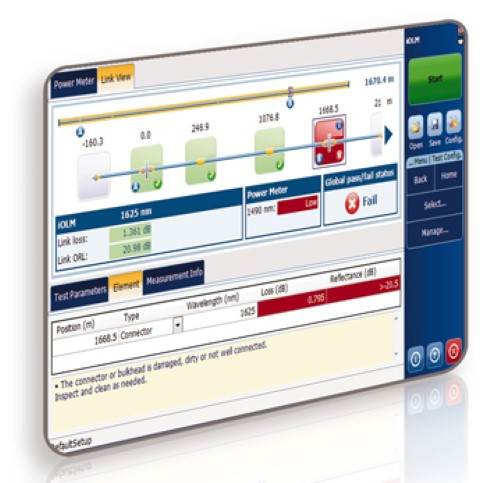
EXFO's Intelligent Optical Link Mapper is a prime example of a game-changing solution. The iOLM lets you take advantage of the full power of your OTDR, bringing automation to a new level—and enabling even the untrained technician to become a test expert in no time. It’s one touch automatic analysis and clear link view display, automatic parameter settings and clear go/no-go results minimises training and avoids misconfiguration. Complex OTDR information is turned into simple and accurate analysis with Link-Aware technology whilst prompt diagnosis enables network issues to be fixed quickly and efficiently.
Given the obvious advantages of such an approach in solving problems, it is perhaps only a matter of time before such tools become indispensable.