Posted on
More from News


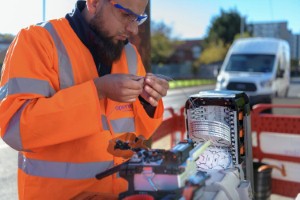
The UK is currently in the middle of the biggest upgrade to its communications infrastructure in a generation. The rollout of full fibre broadband promises to transform the UK's economy by giving consumers and businesses access to much faster connectivity.
However, government and industry alike are stressing the importance of ensuring that these benefits are provided to the entire country, not only urban areas. In the past, rural regions have often missed out due to a combination of high cost and complexity - and some locations still cannot even receive decent ADSL broadband.
To avoid such problems and meet targets of connecting every home in the UK with gigabit broadband by 2025, it's essential that rural areas are made a top priority.
The need for better rural broadband
This comes at a time when more people than ever are looking to live and work in these locations. According to one survey by estate agent Savills, for instance, four in ten people say they are now more likely to consider a move to the countryside than before the Covid-19 pandemic.
One reason for this is because remote working has proven to be a more practical option than many had previously believed, with the ability to work from home offsetting worries about longer commutes.
President of the Country Land and Business Association Mark Bridgeman stated: "Connectivity has played a vital part in home working during the Covid-19 pandemic and, with many individuals and businesses considering a move to the countryside, it’s essential that rural communities continue to receive better coverage.
"Greater digital connectivity in the countryside will play a critical role in the nation's economic recovery, allowing businesses to invest, grow and recruit long into the future."
Of course, for this to become a reality, many places will still need to see improved broadband. So how are efforts to deliver this going?
The efforts being made by the big players
The government has committed £5 billion worth of investment to ensure rural areas that would otherwise be considered commercially unviable can benefit from ultrafast broadband.
A major beneficiary of this is set to be Openreach, which earlier this year set out plans for how it aims to connect the 'final third' of the country's hardest-to-reach locations. As part of this, it identified more than 250 rural locations where work is set to begin in the next three years.
The company noted this has been made possible by new proposals from Ofcom that have helped create the right conditions for Openreach to invest with confidence. However, the firm added it is still aiming to complete as much of the work as possible without government assistance.
Chief executive of the group Clive Selley said: "We're determined to find inventive engineering solutions and effective partnership funding models to reduce costs and enable us to connect as many communities as possible across the UK without public subsidy.
"We hope that by publishing our own plans, we can help ensure that taxpayers only fund connections in communities that really need public support."
Altnets offer innovation
It's not just large firms like Openreach and Virgin Media that will have a role to play in the rural full fibre rollout. The last few years have seen the rise of many smaller alternative broadband suppliers, with the Independent Networks Co-operative Association forecasting these providers will reach 15.7 million homes by 2025.
Many of these are focusing their efforts on innovative new ways to connect rural areas. Often, this will mean using physical infrastructure access to share existing ducts and poles to run their own fibre, but this may not always be possible everywhere, so it's important for innovative alternatives to be available.
For example, one such firm, Broadway Partners, has looked to power lines to help support its cabling infrastructure. It is working with Western Power to harness its network of low-voltage poles to help carry fibre services. This in turn brings its own challenges, such as the need to coordinate with electrical workers and ensure engineers have the correct training, but could be a good way of getting fibre to especially hard-to-reach areas.
The need for improved regulations
Another major consideration for any provider building out fibre networks to rural areas will be ensuring they are able to meet regulations. Gaining access to private land for the deployment of fibre technology can be a long and complex process, so it's important that rules governing areas such as wayleaves are made as simple as possible.
This may be essential if rural broadband targets are to be met. For instance, Terry Daniell, co-founder and operations director at specialist telecoms law firm Trenches Law, has noted that on average, between 20 and 30 per cent of properties in a project will require wayleave consent.
"The admittedly complex wayleave process is embarrassingly outdated," he said. "Its manual nature takes up too much time and is consequently far more expensive than is necessary in a digital age."
His firm has therefore been working on a new tool that aims to automate the investigation, creation and distribution of wayleaves.
Another way to address these issues is to ensure providers are working closely with local communities. For example, one provider, Broadband for the Rural North, has been highlighted by the European Commission for the way it has worked with communities.
Its local volunteers undertake tasks such as mapping out routes, agreeing wayleaves with property owners, and even taking part in the fieldwork of laying ducts and installing chambers.
There's still a long way to go before full fibre connectivity reaches every part of the UK, but with projects large and small gathering pace, the stage is being set for a busy few years for the sector.