
Posted on
More from News


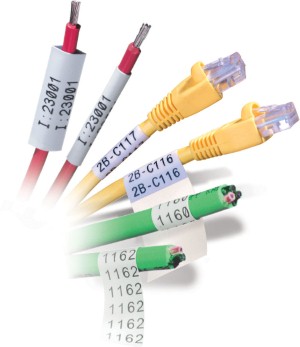
Managing a data centre can be a complex business, and getting it wrong can lead to inefficiencies, cost increases and systems that are unwieldy and difficult to maintain or upgrade.
So what can professionals do to make sure their data centre is operating as efficiently as possible? Tech Target recently offered a few tips that admins should keep in mind if they are aiming to build a solution that's not only fit for today's needs, but has room to grow in order to meet the increased demands of coming years.
For instance, data centre professionals should look at upgrading their cabling technology as stresses on their systems grow. Tech Target noted that IT trends such as consolidation will often test the limits of existing cables, and copper solutions may struggle under the pressure.
Therefore, data centres should consider switching to fibre optic cables in order to achieve the necessary high-speed connections. Data centre pros may already be familiar with this technology if they need to route cables of over 300 feet - beyond the range of copper - but fibre is set to become commonplace for even shorter distances in the coming years as bandwidth demands grow.
Admins should also make sure they're familiar with the latest networking standards approved by the Institute of Electrical and Electronics Engineers (IEEE). In 2016, this body approved four new standards for 802.3 Ethernet, with the most significant of these being 802.3bq and 802.3by, which focus on 25 GE in the data centre.
"For data centre admins, the move to 25 GbE will mean lower costs, but will also require new network hardware capable of handling these speeds. Confirm that data centre switches, network interface cards, cables and other equipment can handle 25 GbE," Tech Target said.
Once these requirements have been met, professionals should also look at how they manage workloads, as they may need to rethink how resources are provisioned in order to make the best use of higher bandwidth.
Tech Target also recommended paying close attention to developing network diagrams. While the publication observed creating and updating physical and logical network diagrams can be a tedious process, a well-managed diagram can make it much easier to understand how data flows through a network and identify any potential bottlenecks or other issues.
It advised admins to narrow the scope of these diagrams, which will help minimise the time spent creating and maintaining diagrams, and prevent professionals from having to update diagrams due to a single network change.
One bottleneck that may be increasingly common is caused by new technologies such as hyper-converged infrastructure, which result in data flowing 'east-to-west' within the data centre itself, rather than a north to south direction of traffic between servers and clients.
This can be avoided by the addition of leaf-spine architecture, which Tech Target explained consolidates user traffic before passing it along the core 'spines' of a network.
"Leaf-spine also helps with the logical networking of a data centre, as information is shared more directly and efficiently between devices", the publication stated.