Posted on
More from News


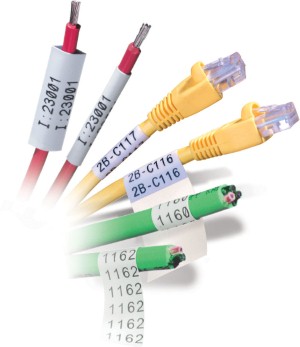
Implementing a reliable network cabling solution is vital to ensuring your infrastructure maintains a high level of connectivity.
In order to make the most of your setup, there are going to be times when you need to connect fibres together. In the days of metal and copper wiring, this posed a minimal problem, yet the introduction of optical fibres has caused something of a headache for a number of businesses.
Thankfully, there are plenty of options at the disposal of professionals looking to either improve or completely overhaul their network.
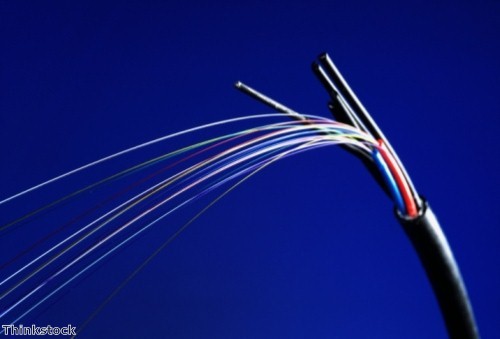
Fusion splicing has become one of the most popular methods, using heat to fuse two fibres together in such a way that when light passes through it does not scatter or become reflected by the splice.
The process needs to be undertaken in the best possible conditions and by a professional that knows exactly what they are doing. The main reason being that the spliced region needs to essentially be as strong as the rest of the fibre.
How it works
The process of fusion splicing begins by preparing the fibres in need of being joined.
The first step is to remove any protective coatings from the fibre as this may otherwise have an effect on the performance of the finished product.
It is for this reason that the fibres then need to be cleaned by using either alcohol or wipes, removing any residue that may otherwise impact on how light travels through the splice.
The next step is to cleave the fibre so that the endface is perfectly flat and is also perpendicular to the axis. The cleave angle needs to be as close to 90 degrees as possible as this will lower the potential optical loss of the splice.
Once the preparation is complete, it is then possible to begin the splicing process. There are a whole range of fusion splicing products available on the market, differing in the way they heat fibre ends.
Possible products
A popular option is the Inno IFS-10 Fusion Splicer, a compact and lightweight unit featuring the latest in core alignment splicing technology. Programmed to splice all common fibre types with precision accuracy it features a bi-directional large display, a friendly GUI interface, battery power for as many as 350 splices and military grade keypad design. From the same manufacturer we also have the new line of View Fusion Splicers with x520 Magnification, the industry's highest magnification.
For an easy to use, affordable (under £900) alternative, the EasySplicer operates with only three buttons, has a splicing time of less than 7 seconds and includes a cleaver and stripper.
Advantages
The nature of fusion splicing means that it can sometimes be tempting to opt for a simpler alternative, such as fibre optic connectors and mechanical splicings.
However, it is worth bearing in mind that fusion splicing holds some key advantages over such methods.
For instance, not only is it compact, but it also has the lowest level of insertion loss and back reflection, as well as a higher level of mechanical strength.
It is also permanent and can withstand extreme changes in temperature making it ideal for a wide number of applications.
Fusion splicing really is a method that is worth getting right, so if in doubt it is always good to seek out expert advice.