Posted on
More from News


The UK's broadband infrastructure is changing rapidly. The need for fast, reliable internet services is greater than ever, and these demands have only been exacerbated after a testing 2020 that saw overall usage double as more people spent time at home. This means for many people, gigabit-capable fibre-to-the-premises (FTTP) connectivity will be essential.
While the UK has fallen behind many other European countries with its FTTP rollouts in recent years, great efforts are being made to close the gap and bring this technology to as many people as possible.
In order to do this, new solutions will be needed to support communication providers. And among the most important of these will be physical infrastructure access (PIA).
The changing face of the UK's broadband networks
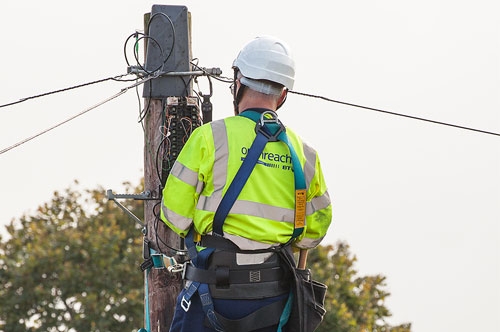
PIA ensures that other providers are able to gain access to Openreach's existing duct and pole network, which will play a key role in helping these companies roll out services quickly and cost-effectively.
The rise of these alternative network providers, or altnets, has been one of the biggest changes in the UK's connectivity landscape in recent years. It means many people will no longer be solely reliant on Openreach for the delivery of high-speed broadband services, and promises to offer more choice and competition in the market.
Indeed, it's estimated that by 2025, around 15.7 million homes and businesses throughout the UK will be reached by altnets, with more than four million live connections dependent on these providers.
But this is only likely to be achieved with the help of PIA, which will enable these providers to take advantage of existing infrastructure such as ducts and poles to more easily build out networks.
The growing importance of PIA for altnets
When it comes to ducts, PIA allows communication providers to obtain a license to install their own sub-ducts - up to a maximum diameter of 25mm - within Openreach's access ducts. For poles, similar licenses can be used to allow communications providers to add cables or other attachments to Openreach's infrastructure.
This makes it much more viable for altnets to deliver high-speed services throughout the UK. Without this access, the high cost of constructing their own infrastructure from scratch would make it hugely difficult for these companies to provide a strong service and offer effective competition to Openreach.
In its 2018 Physical Infrastructure Market Review, Ofcom therefore proposed opening up access to these services, which has become the PIA product. The regulator noted: "Improving access to Openreach's ducts and poles for rival operators can help to address this enduring advantage for Openreach in deploying fibre."
How is progress being made?
A recent review by Ofcom on efforts to legally separate Openreach from BT also looked at progress of the use of PIA. It noted that overall, significant steps have been made in the implementation of this, although several "growing pains" remain.
According to ISPReview.co.uk, there has been "considerable interest" in PIA, with more than 90 communication providers so far having registered with Openreach for the product, and around half of these already building PIA-based FTTP networks.
What's more, orders have continued to increase throughout 2020, despite the challenges of Covid-19. Ofcom's report found order volumes over the past 12 months have covered over 12,000km of duct and more than 50,000 poles.
The remaining challenges
However, the implementation of PIA has not been without its difficulties, with the regulator highlighting a few common concerns raised by operators.
Among these, it noted some providers have expressed worries that they are not being treated equally, particularly when it comes to the use of Openreach's ducts. Despite the aim of PIA being to ensure fair access, some providers say they are still at a disadvantage in terms of complexity, costs or the time taken to complete installations when compared with Openreach.
Meanwhile, progress on some issues, such as process improvements and addressing inventory records issues, has been slower than communication providers had expected. Some providers have also expressed concern to Ofcom about how Openreach uses the data it gathers as part of the PIA process.
However, the regulator noted it has been working with both Openreach and the rest of the industry to agree the priorities for further attention and determine what actions will be needed to address these issues and streamline implementation.
ISPReview.co.uk also said that in comparison to the barriers that have already been overcome in order to develop the PIA offering, these remaining issues should be much easier to resolve.
Building confidence in PIA will be essential if the UK is to meet its gigabit broadband goals and encourage competition among altnets. But with the right foundations now in place, these communication providers should have the tools they need to speed up their rollouts and boost the UK's broadband capabilities.