Posted on
More from News


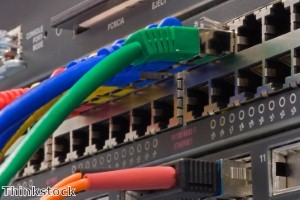
The road to faster Ethernet capabilities has been long and arduous, but now the data centre industry faces the prospect of achieving an important milestone - affordable and reliable 100Gbps connectivity.
Despite the fact that 100Gbps Ethernet connections have been available for almost a decade, many data centres have been reticent to invest in a technology that was deemed too expensive to rollout on a large scale. In response, the industry saw a shift to 40Gbps operations as the norm. However, all this could be about to change, as a range of factors have now combined to ensure the industry is on the cusp of widespread uptake of new 100Gbps solutions.
Indeed, John D'Ambrosia, chairman of the Ethernet Alliance trade group, told The Next Platform that the rollout of 100Gbps Ethernet connectivity could be the "largest we have ever seen".
One important aspect that will drive future uptake is the fact that the 25G signaling standard that hyperscalers like Google and Microsoft sought to make an industry norm just a few years ago are now leading to new ASICs entering the sector. These solutions allow standardisation of iron across switching and routing workloads at a lower cost than previously available, meaning the overall cost of upgrading to 100Gbps is now falling.
The 25G standard has therefore changed the outlook for data centre operations immensely, with managers now increasingly looking to upgrade facilities with increased bandwidth and capacity as a result. Add to this the fact that the growing uptake of machine learning and Internet of Things workloads are dependent upon gathering vast swathes of information from an array of connected devices, and the need for faster Ethernet capabilities becomes increasingly clear.
Savvy installers will therefore aim to get ahead of the crowd in the shift to faster Ethernet capabilities, with sensible upgrade solutions now including a switch to 25Gbps on server ports and either 50Gbps or 100Gbps connectivity on switches. Cable splitters can then be employed to deliver 25Gbps today, while allowing for future upgrades to 50Gbps or 100Gbps simply by changing the splitters and doubling or quadrupling their switches.
Overall, it means the 40Gbps Ethernet standard that many viewed as a stopgap for an industry tackling the high cost of upgrading to the fastest available resources could soon change. Indeed, with the issue of affordability now increasingly falling by the wayside, data centres around the world will soon be converting to 100Gbps - a process that many analysts believe is long overdue.