Posted on
More from News


With networks becoming increasingly sophisticated in recent years, there have been a number of challenges for business owners and chief information officers to overcome.
One of the most common trends has been that despite the shift towards the cloud, physical space for data centres remains at a premium.
That means the pressure to ensure that each rack and server is as powerful as possible is now greater than ever, presenting a significant challenge in terms of how best to ensure hardware does not overheat.
However, it is vital to ensure that the right solution is chosen as otherwise it can prove to have a detrimental effect on the performance of your network.
UPS systems or not?
Small uninterruptable power supply (UPS) units can be easily accommodated within racks, but larger systems often provide protected power in a manner that is far more efficient, and allows for users to put in place preventative measures with reduced downtime.
UPS systems work by converting incoming utility power from AC to DC, allowing the power to be stored in certain pieces of hardware, including batteries.
Power is then converted back to AC in order to supply power to servers. Alternative UPS systems can blur that conversion and make things more complicated, providing DC power directly to hardware, which in turn can utilise power supplies that accept DC input. It all means that extra conversions are eliminated, enhancing efficiency.
Cooling
When it comes to cooling, under-floor air is a popular method used by many network managers, with hot or cold aisle containment helping to improve cooling densities by preventing hot and cold air from mixing.
However, sometimes there is a need to retrofit a cooling solution, which can include chilled water doors, fans and or radiators, all of which can help to transfer a portion of heat generated by the rack.
Meanwhile, direct-to-chip cooling delivers liquid cooling directly to processors, memory components and other pieces of hardware. This up-and-coming technology could help to remove around 60 per cent of the heat generated by the rack.
Make sure management is on point
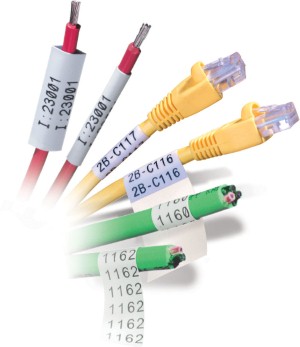
Managing any cable set-up is always a challenge when it is in a dense environment, with multiple network connections per server that can potentially offer some 50 to 100 servers per rack.
Having the correct cable management policy in place is therefore hugely important to ensure that it is successful and not held back. Not only does this help operational efficiency, but it also facilitates the process of identifying potential problems quickly and easily.