
Posted on
More from News


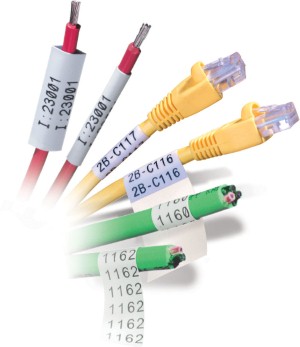
With the world becoming increasingly digital focused and all companies having to deal with ever-growing data volumes, it's never been more important for firms to have fast, reliable networks that are able to cope with the increasing demands that will be placed on them in the coming years.
One technology that will be central to this is fast Ethernet connectivity. Already, gigabit (Gb) speeds are the norm for many businesses, but increasingly, it is 10Gb that will become the standard for many companies in the coming years.
In a recent blog post, product manager for small business switching at Cisco Aaron Wu noted that every aspect of a firm's operations, from sales and marketing to customer support, will now depend on a fast network.
"There has never been so much traffic and applications running on the networks and it keeps growing at a high pace," he said. "Technologies like 802.11ac wireless, server virtualisation, IP convergence, cloud and Internet of Things greatly improve productivity, but also bring even more pressure to your network."
Therefore, a network that only just meets today's needs is no longer adequate, as solutions must be able to support growing firms in a more digital world. For many companies, this will mean putting 10Gb Ethernet connectivity at the core of their networks.
Mr Wu noted that this technology helps businesses avoid network congestion at busy times, boosts the productivity of employees, offers improved response times to customers and enables them to bring new products to the market faster.
In order to upgrade to 10Gb capabilities, three elements are required - core switches, access switches with 10Gb uplinks, and 10Gb network interface cards for servers and storage devices. In the past, this could have quickly become a very costly investment, but Mr Wu noted that today, firms can pick up components designed specifically for small and medium-sized businesses for a fraction of the cost of a few years ago.
Businesses that already rely on Cat6a Ethernet cables will be able to use their existing cables, as these are capable of handling 10Gb speeds. Those who still use Cat5e cables, however, will have to replace their cabling in order to make full use of the technology, as Cat5e cables max out at speeds of 1Gb.
When firms are migrating their network to this technology, Mr Wu noted they do not have to make the jump all in one go. Instead, organisations should start by upgrading the core switches that are used to connect all their access switches, servers and storage devices together.
Once these have been migrated to 10Gb, businesses can then focus on moving key access switches and servers to the technology, which should result in an immediately noticeable performance boost across key parts of the network.
"The rest of the network can stay as they are for the moment, because 10GBase-T ports are backward compatible with Gigabit links, and 10Gb SFP+ cage can also work with 1Gb SFP modules," Mr Wu said. "You can upgrade the rest of your network to 10Gb whenever you’re ready or in multiple phases if you wish."