Posted on
More from News


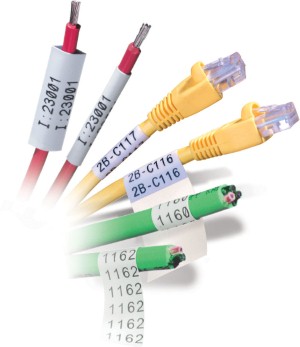
In September, cable provider CommScope announced it had embarked upon the world's first wideband multimode fibre (WBMMF) installation at the Golden 1 Center in Sacramento - the future home of the Sacramento Kings NBA team.
But what is this technology, and why is it something that the data centre industry needs to be aware of? In a recent blog post, manager of digital tools and technology for CommScope Ricardo Diaz sought to shed some light on this.
He explained that WBMMF is a development that builds on the existing Wavelength Division Multiplexing (WDM) technology. WDM allows several fibre-optic signals to be sent down a single cable by using different wavelengths of light, resulting in a huge increase in the capacity and data transfer rates of a cable.
However, this benefit has only been available with singlemode fibre cables, and as the predominant cable of choice for most data centre applications is multimode fibre, the capabilities of WDM has been something that data centre managers were not able to actually use.
This is where WBMMF comes in. Developed by CommScope and introduced in 2015, this technology can transfer the power of WDM to multimode fibre cables.
"Essentially, WBMMF works by providing multiple lanes within a single fibre [and] at least four different wavelength lanes," Mr Diaz explained. "This enables the use of four data streams operating at 10G (for 40G total) or 25G (for 100G total)."
These signals are multiplexed at each end into the fibres, and because WBMMF provides multiple separate lanes, it can be used for efficient Bi-directional (BiDi) traffic for proprietary applications.
Standards bodies have been quick to incorporate WBMMF into their roadmaps, Mr Diaz noted, which indicates how excited the industry is about the potential of this technology. By the end of this year, the Telecoms Industry Association (TIA) is expected to approve standard 942-B which, among other things, recognises WBMMF as an allowed and recommended fibre for data centre migration.
Earlier this year, CommScope also had its testing processes for WBMMF cables certified by Intertek, demonstrating that its facility in Richardson, Texas, meets TIA standards.
Crucially, WBMMF is also backwards compatible with legacy optical equipment and connectors. This should make it easier for data centre managers to migrate to the technology in order to enjoy its higher speeds.
Mr Diaz said: "While WBMMF is a big leap forward, it's only one piece of a much larger infrastructure puzzle that includes advanced MPO connectors, fabric networking switching and more. If you keep the big picture in mind and stick to the standards, you'll be fine."