Posted on
More from News


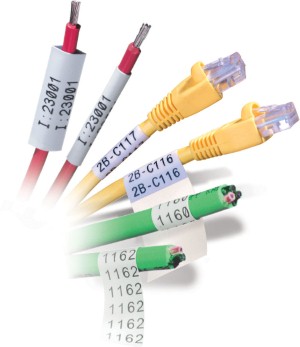
Even if you happen to have one of the most impressive network cabling setups around, there are inevitably going to be times when something goes wrong.
There is no shame in making such an admission and it certainly is not an indication of unsolvable weakness within your IT infrastructure.
In fact, the acceptance of problems within any area of your cabling system is the first step to ensuring that the potential effects of any issues is kept to a minimum.
Improved technology still vulnerable
Improvements to network cabling technology have allowed users to benefit from speeds that many onlookers would have perhaps once thought to be impossible. Yet while innovations such as fibre optics have changed the landscape beyond recognition, it is not immune to problems.
The benefits that come with fibre optics, in particular, include the ability to transfer more data at a higher speed, as well as better value for money and a reduced risk of signal degradation.
However, those advantages begin to quickly evaporate in the event of a problem in the network, leading to issues such as greater system traffic and even the risk of downtime.
Based on industry surveys, the cost of downtime being typically cited by Gartner is $5,600 p/minute (£3,705.14 p/minute), which adds up to well over $300,000 per hour (approximately £200,000).
Prevention is key
Benjamin Franklin once said "an ounce of prevention is worth a pound of cure" and that sentiment certainly holds true when it comes to fibre optics.
Without regular testing, problems in a network can be allowed to get to their worst possible point before they are solved.
This situation has created a demand for a wide range of innovative products aimed at allowing even the most untrained technician to become an expert quickly and easily. The optical time-domain reflectometer (OTDR) has become a firm favourite with many technicians, injecting a series of optical pulses through the fibre, while also extracting scattered light from the same end of that fibre.
It is the strength of the pulses that provides the measurement for the fibre's functionality.
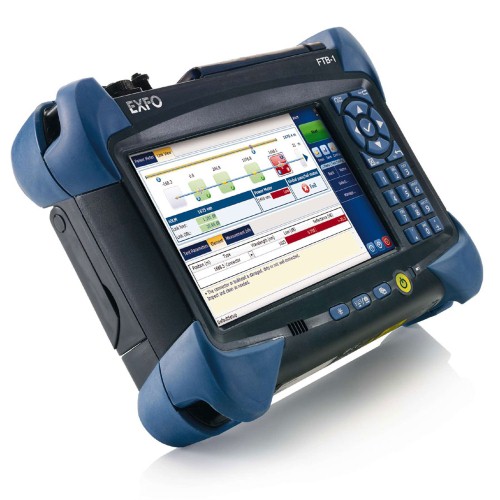
Yet even OTDRs have experienced an increase in innovation, which is at the heart of EXFO's intelligent Optical Link Mapper (iOLM).
This new product aims to bring out the full power of an OTDR and its testing capabilities, enabling even the most untrained technician to conduct tests with ease as information is conveyed in as simple terms as possible.
Utilising multipulse acquisitions and advanced algorithms to deliver detailed information on every element on the link, the iOLM offers a series of impressive features.
A one-touch interface is combined with automatic analysis, which is displayed in a crystal-clear link view display.
Training is reduced and misconfiguration avoided thanks to automatic parameter settings, as well as clear go or no-go results.
No stone is left unturned either, with every part of the network analysed for problems, meaning that diagnosis and repairs can be carried out quickly and efficiently.