Posted on
More from News


All businesses, whether large enterprises or small firms with just a few employees, are increasingly recognising the value of technology such as mobility, big data and cloud computing, and this is leading to huge increases in the amount of information that networks have to handle every day.
A great deal of this is now being sent wirelessly, so devices such as Wi-Fi access points have become an essential part of any business' network. However, this can present challenges for many companies, as the equipment they are relying on may be struggling to keep up with today's demands.
In a piece for Network World, connectivity provider Aquantia noted that the latest generation of Wi-Fi access points now uses the IEEE 802.11ac standard. This allows them to deliver throughput of up to 5Gbps, which will need to be transferred from the access point to the rest of the network and beyond.
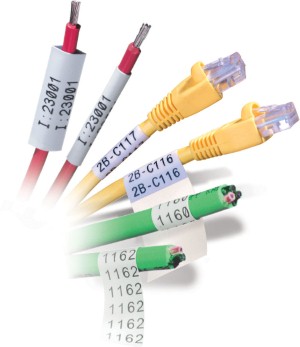
But this is often where the problems lie, as many enterprises still rely on legacy Cat5e Ethernet cables that max out at 1Gbps.
The most obvious solution to this is the deployment of 10Gbps Ethernet cabling solutions, but Aquantia observed this may not be a practical option for many firms at the moment. It stated that around 90 per cent of the installed cabling base in enterprise and small business environments consists of legacy twisted pair copper cables that were only designed for speeds of 1Gbps, and replacing them will be highly expensive and disruptive.
In order to meet this challenge, industry organisations have joined forces to create the NBASE-T Alliance, to develop new wired Ethernet technology that can boost the speed of existing solutions.
Established in 2014 by companies including Cisco and Aquantia, it now has more than 45 members and has worked on technology that can increase the capacity of legacy Cat5e cables to 5Gbps over distances of up to 100 metres.
Being able to access this higher performance over existing cabling solutions is highly valuable to both end-user and equipment manufacturers, and there are now a wide range of 2.5Gbps and 5Gbps switches and access points available to help businesses overcome the bottlenecks they may be facing.
"Gigabit Ethernet is a 15-year-old technology, and it shows," Aquantia stated. "It’s now time to turn the page and upgrade the network to the high-speed digital age."
It added that as the latest generations of smartphones, tablets and laptops are all equipped with 802.11ac Wi-Fi chipsets, being able to fully exploit this technology will be essential. Aquantia noted that without it, it will only be a matter of time before employees and other users complain they they are not able to make the most of the devices they have.
While upgrading to Cat6a or Cat7 Ethernet cabling will be the best long-term solution, for those that are unwilling or unable to make this transition just yet, N-BASE T products can help plug this gap