Posted on
More from News


The use of audio and video equipment has, in recent years, become increasingly mainstream for a number of businesses. Many companies and organisations have realised that the digital age has left many workers with a need for something a little more innovative when it comes to day-to-day operations.
The sheer volume of products on the market means that it has never been easier for companies to get connected, thus expanding at a rate far quicker than would have been previously anticipated.
Yet with great expansion comes a more pressing need for top class communication, and video conferencing has quickly established itself as avaluable tool in helping employees collaborate more closely than ever.
Video conferencing's popularity stems from the ability to recreate a physical meeting between two parties, without having to travel potentially significant distances. It means that companies can enjoy the advantages of face-to-face communication in a way that is more flexible than ever.
In 2010 alone, revenues from video conferencing grew by 18 per cent to reach an impressive £1.3 billion, with Infonetics suggesting the market for such products could more than double by 2015, which could see it valued at over £3 billion.
There has been a substantial increase in companies and organisations seeking the most reliable audio and visual hardware.
As a result, chief information officers are hopeful that workers will take advantage of such systems, allowing them to enhance morale and productivity.
However, video and audio is not only proving valuable for collaboration, with many companies beginning to notice the benefits of using more hands-on methods when training both new and existing members of staff.
Figures uncovered by Plume and Post in 2013 found that 83 per cent of learning is now done visually, with an infographic from Digital Marketing Philippines suggesting that 85 per cent of people in the USA alone watch videos online.
It is therefore safe to say that learning with the help of video has become increasingly mainstream for a number of firms and workers.
Getting started on your set up
The sort of set up you go for will largely depend on what you plan to do with it. One of the key considerations is whether or not you want to go with an infrastructure that will allow for standard or high definition.
Although in terms of audio there is not much of a difference, it is always advisable to go with an HMDI set up if you can. The cables are cheaper and thenumber of wires required is greatly reduced.
This is fine when putting together a new set up, but there will undoubtedly be times when HDMI is not possible to implement due to current infrastructure as some devices popular in the corporate world don't accommodate higher resolution formats.
There is always the option of replacing your hardware, but the costs of such a move could prove prohibitive for some.
As a general rule keep things simple. Make sure you have a clear idea about how you are going to use your audio and visual set up as this will help you choose the appropriate hardware.
Bagging the best parts
Comtec has long held a reputation for providing some of the best in audio and visual cabling solutions, including composite video and audio splitters, KVM switches & extenders, SVGA splitters, switches and converters, as well as HDMI couplers, splitters and switches.
For example, the Ultima SVGA and HDMI converters, allow users to display images from a computer to a monitor or a large TV, meaning they have the flexibility to fit into almost any set up, offering support for up to 1080p resolution.
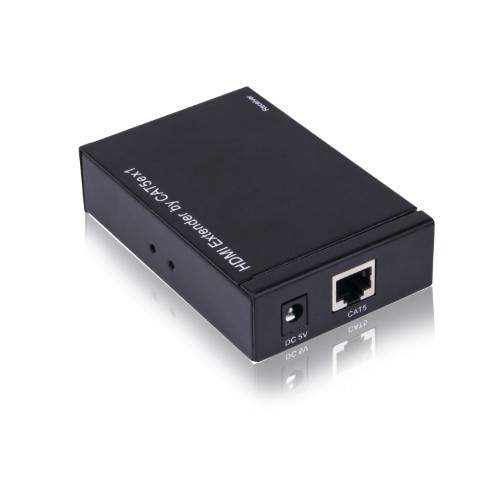
The same can be said for the USB booster/extender via Cat5 (RJ45), which helps to extend the distance fo USB device by adding over 50 metres and is ideally suited to businesses using Cat 5/5e/6 patch leads.
Firms do not therefore necessarily need to give their system a massive overhaul in order to take advantage of the benefits that come with an effective audio and visual set up.