Posted on
More from News


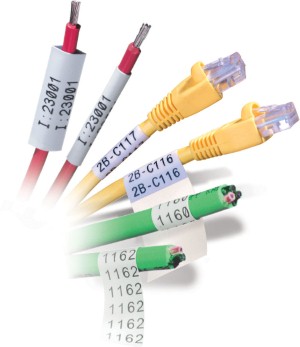
There can be no doubt that the internet has had an increasingly large impact on our everyday lives both in the home and in the workplace, leading to rapid and noticeable advancements in the necessary infrastructure.
Being connected has now gone beyond being a luxury of the IT-obsessed, becoming a concept as commonplace as the television or the microwave.
Ethernet is widely seen as the best way of both creating and maintaining a fast fixed connection, yet the advancements in network technology mean that the setting up of such a system can be a tricky business.
Cables alone not the 'be all and end all'
When seeking out greater network speeds, one of the most prominent causes of confusion for many Ethernet cable buyers is whether to opt for Cat5e or go for Cat6.
Both types are twisted pair cables that utilise copper wires, of which there are usually four in each cable.
One of the main draws for Cat6 is the fact that it has a number of specifications in place to address crosstalk and system noise, providing performance of up to 250 MHz, while Cat5e is only capable of performing up to 100 MHz.
This is largely made possible due to using a spline (a longitudinal separator) within the wiring, which in turn allows for each part of the twisted wire to be isolated.
As a result, there is a common misconception that by opting for Cat6 it will somehow automatically lead to the creation of an "all gigabit" network. However, this will only ever be possible if every component within your system is gigabit rated as a network will only ever run as fast as your slowest device.
In order to work out what type of cabling you want in your network it is therefore important to ensure you examine every piece of hardware that you intend to run within that network.
Even if the components of your network are able to reach gigabit speeds, then you can technically still use Cat5e, it's just not certified to run at those speeds, meaning that reliability is compromised.
On the other hand, Cat6 cables are specifically designed to reach such speeds. Although they are not without their negatives.
Shell out more or not?
While Cat6 is designed to run at higher levels of performance, it comes with a substantially higher price tag. For many companies in the private sector, there is little reason for splashing the extra cash as a Cat5e system normally offers enough power to handle the demands of most businesses.
Yet there is still a sense that buyers shell out the extra cash just because they want the best cabling possible, often unaware of how such a system can benefit them and their business.
Do you really need Cat6?
However, to write off Cat6 on the basis of it not fitting in with your current infrastructure would arguably be foolish. Even though, your current system may not have the components needed to reach the potential speeds provided by Cat6, it doesn't mean that things will always be that way.
Increasing your bandwidth capabilities is a bit like adding extra lanes to a highway. Sure there might not be many cars on the road at the moment, but advances in technology often leads to increased popularity, meaning that it is hugely important to be prepared.
Data rates have already nearly doubled over the course of the last 18 months, meaning that many systems with Cat5e cabling could soon be pushed to the limit.
It all points to Cat6 one day superseding Cat5e, meaning that organisations will have to think very carefully about the future before making a decision on which one is right for them.
Cat5e may be good enough for the demands of your network now, but the financial savings made could be tatters later down the line if you have to rip up the walls of your home and office just to install Cat6 later on.
As with any attempt to install new pieces of infrastructure, considering your future corporate needs is key.