Posted by Understanding economies of scale on
More from News


When your business begins to grow, it can seem a blessing without any possible downsides. However, a period of prolonged growth does, unfortunately, come with a number of obstacles and problems that need to be overcome.
Increasing costs
There is often a temptation for companies to take advantage of their ongoing success by spending more money in order to enhance its unit output, whether it be through purchasing new supplies or through hiring new staff.
The latter approach is one that firms should think very carefully about as the hiring of new members of frontline staff may seem like one of the best ways to go about expanding your business, but can bring with it a number of hidden costs.
For instance, many large-scale IT environments carry the capability to accommodate almost every facet of the expansion process, yet similar smaller systems will often only cater to immediate needs, leading to networks running out of space at a faster rate.
That is why hiring professional help is so important to create a solid, and expandable, network.
Poor set-up can be costly
If, for instance, the expansion of a network is done without the correct level of expertise, there is a chance that storage needs could be misread, making it more likely for equipment to be incorrectly set up. This leads to problems with functionality and storage that will require more labour and cash later down the line to get things back up to speed.
All in all, managing data storage expansion is never just as simple as adding more space when needed. It often requires a complicated and multi-layered approach that reaches out to every aspect and employee of a business.
Although using the skills of a professional for installing the components of a network is key to success, it can come at a higher cost.
However, when those monetary expenses are considered, companies need to think about how the effects of overall risk, loss of data and system will impact their bottom line.
Installation and cabling
A popular trend among many traditional systems was to have a standalone unit where the processor and storage were part of the same system. However, that trend is now beginning to shift, with many organisations now favouring the use of a separate networked storage system that can subsequently be accessed by a number of users and servers.
The use of a separate storage system brings with it a number of advantages, including easier expansion, but there are also several obstacles.
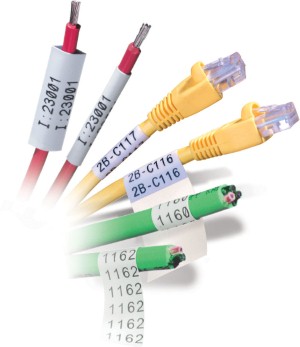
One of the most prominent challenges is the fact that because storage systems are separate, there is a greater need for faster network connectivity, enhancing the need for an exceptional cabling set up.