
Posted on
More from News


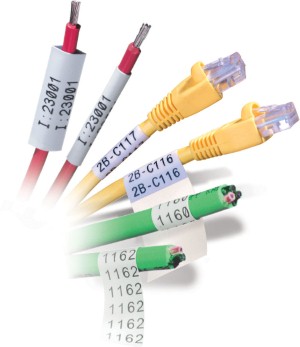
Two of the biggest and most interconnected trends in the IT sector at the moment are the Internet of Things (IoT) and smart cities.
Smart cities will depend on data in order to run services more efficiently, reduce waste and carbon emissions, and enable the smoother running of transport networks. And to create this data, a large, connect network of IoT devices will be essential.
IoT devices, which refer to any network-connected items that have a specific task - such as environmental sensors, security cameras and even innovations such as autonomous vehicles - are set to number upwards of 20 billion in the coming years. Therefore, ensuring these items are able to communicate effectively, with no bottlenecks or latency, will play a key role in keeping smart cities running.
The evolving shape of today's networks
The result of this is that networking solutions will have to adapt in order to accommodate these new demands. For instance, how wired and wireless solutions interact will change as new technology such as 5G comes to be incorporated into smart city grids.
At the same time, networks are also seeing a shift in how data is processed. Whereas traditional solutions would send information back to central servers for analysis, these functions are increasingly being moved to the edge of the network, meaning data is processed at the point of collection, before being transferred.
These mobile edge computing (MEC) innovations and other IoT devices will need effective network connections and will need to be housed in the most effective environments that can ensure they have access to all the connectivity they need to work effectively, which is where the supporting ecosystem of smart cities needs to step in.
The right options to support new sensors
Morné Erasmus, director of smart cities at CommScope, noted in a recent blog that one solution to this is the deployment of new 'smart poles' throughout cities, which can host all the technology needed for IoT-based networks to thrive.
This may include 4G or 5G antennas to connect the equipment to wireless networks, as well as full or hybrid fibre cabling for fixed connectivity to data centres. They can also be used to support public Wi-Fi hubs, among other solutions.
One common option for the deployment of these poles is in street lights, either as upgrades or complete replacements of existing infrastructure.
Street lights often make perfect locations for smart poles as they are uniquely spaced throughout the city and provide power and altitude. In many cases, they are already set to be upgraded with LED replacements, so the incorporation of advanced connectivity options at the same time can kill two birds with one stone.
An effective smart pole can therefore carry everything from lighting control systems, cameras that can connect to traffic management systems, environmental sensors, emergency call stations and even digital signage.
However, with so many technologies taking their place in these smart ecosystems, it is vital that open standards are maintained to support ongoing maintenance and future upgrades.
Mr Erasmus said: "It is critical for the industry to support an open ecosystem that allows customers to choose their own edge devices, software and cloud providers.
"This is particularly important due to the long lifecycle (decades) of public projects compared to typical enterprise (years) engagements. In addition, regulatory guidelines should also be considered."