Posted on
More from News


Despite the increase in wireless connectivity, the use of Ethernet is still noticeably strong, the network tool of choice for use in even the most demanding environments.
However, the success of Ethernet would not have been possible without the use of the right connectors, which form a largely critical link between cables carrying data and devices recording and communicating data and information.
The main reason so much trust has been placed in Ethernet is due to the fact such networks handle substantially larger amounts of data at a faster speed.
Many companies see the move as being an easy one due to the fact that many of them have expertise on Ethernet already among their members of staff, making it easier to troubleshoot any problems.
Nevertheless industrial Ethernet still poses a number of challenges when it comes to implementation.
Connectors adapting to changes
Ethernet was initially a technology reserved for office environments, but has since been adapted for industrial settings, meaning that connectors have had to adapt too.
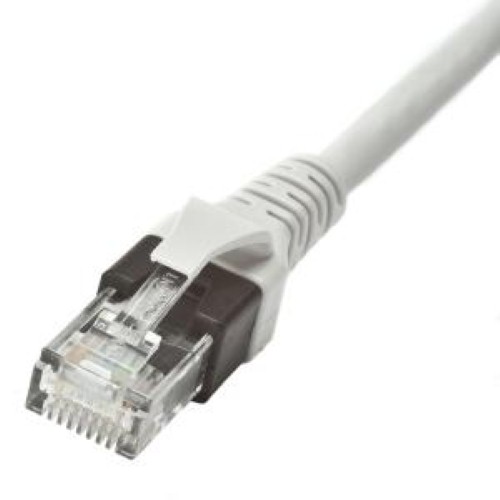
M12 connectors are largely recommended for industrial uses, but RJ45 connectors remain very popular inside panels and cabinets, where they are protected from any environmental influences.
RJ45 connectors also offer quick access to data as they can be plugged directly into a laptop, allowing engineers to quickly obtain what they need without the need for special adaptor cables.
The design and construction of RJ45 is largely defined by the IEC 60603-7 standard, with RJ45 8-pin connectors for all current Ethernet categories, as well as connectors capable of handling 2- and 4-pair wiring.
Despite the ubiquity of RJ45s, many manufacturers have begun to demand more robust alternatives in a bid to find a solution more suited to the industrial floor.
The RJ45’s plastic ends and overall design are arguably not ideal for harsh factory and plant environments, where they are exposed to shock, vibration, varying temperatures, and exposure to water and oil, which can cause damage to connectors.
M12 connectors have subsequently become more popular with engineers, having previously been used with sensors and adapted for Ethernet.
These connectors contain a rugged overmold that helps to encapsulate the connector's components, while also boasting a minimum of IP67-rated protection against dust and water ingress.
Not that any of these features compromise the performance of the connector as it can offer data transfer speeds as high as 10 gigabits per second (Gbps), depending on the number of pairs and category of cable.
Keeping pace with Ethernet speeds
The data speeds made possible by Ethernet has seen sparked moves to ensure that connectors are adapted accordingly.
For instance, connections of speeds up to 100 megabits per second (Mbps), or 100BASE-T, an Ethernet cable needs only two pairs of wires, while four pairs are needed for speeds up to 1 Gbps, or 1000BASE-T.
Industrial Ethernet connectors have continued to be updated in order to accommodate these ever-increasing data transmissions, with the most recent advancement being the 8-pin M12 X-Code design, which can handle 10 Gbps Ethernet transmission speeds.
The reach these speeds, the X-Code connector relies on advanced shielding and either Cat6A or Cat7 copper cables, containing each of the four twisted pairs shielded from one another, helping to prevent crosstalk from harming data quality, as well as unwanted signal coupling from one pair to another.