Posted on
More from News


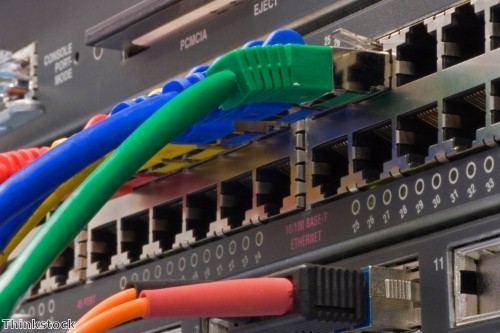
Setting up a network for your business can be a demanding task, but the fast-paced nature of the modern digital age means it is never possible to rest on your laurels.
Room for expansion is a key part of any network, but the process of adding new components to your system is not always straightforward.
More devices means more power
As enterprise networks continue to grow, components that were once on the outskirts of structured systems, such as wireless access points (WAPs), security network cameras and voice-over-IP (VoIP) phones, have grown in prominence and are now essential components to a digital business.
The main headache comes with how to power these devices.
Power over Ethernet (PoE) is a popular road to take for many companies.
PoE allows network managers, installers, and integrators to use structured cabling as a means of providing power and data to network devices.
The amount of power made possible by the technology was once limited to 12.95 watts by the original PoE standard, IEEE 802.3af.
However, that was changed in 2009 with the revised IEEE 802.3at, which raised the power supply to 25.5 watts. The next step is IEEE 802.3bt, which could soon deliver as much as 100 watts of power, taking the possibilities of enterprise networks to a new level.
Advantages of PoE
PoE carries a number of attractive benefits, with the most prominent being financial savings.
Because it operates across the UTP data cable, there is no need to run both data and power lines to each device in the network.
It also brings added flexibility as it makes it easier to locate devices without having to worry about the nearest electrical outlet, while a centralised power source backed up by an uninterruptible power supply (UPS) gives it the reliability needed to power technology such as VoIP, even if the main power goes out.
How it works
Ethernet cabling is made up of four twisted pairs, with PoE sending power over these pairs to devices within the network.
As a result, two pairs are used to transmit data, and the remaining two pairs are used for power.
Interference is eliminated as a concern as electricity and data are located at opposite ends of the frequency spectrum, meaning they can travel over one cable.
That's not to say there aren't considerations to make. For instance, when power is applied to balanced cabling, the temperature will rise due to the heat generated by the copper conductors.
If the installation conditions are correct, this heat is lost into the surrounding environment, allowing the cable to reach a steady temperature.
The temperature of any cable should never be allowed to exceed its temperature rating.
Similarly, the connecting hardware and outlet connector should also be both capable of handling the maximum allowable current for both the 802.3at standard and the expected 802.3bt standard.