Posted on
More from News


Perhaps one of the most common questions to arise when approaching the implementation of a structured cabling solution is the difference between Cat5e, Cat6 and Cat6a cables.
Opinion can sometimes get in the way of reality when it comes to such matters, resulting in what can seem like a proverbial minefield of varying sentiments.
What the different types of cabling have in common
The confusion surrounding this topic is arguably down to the similarities all three types of cabling share.
They all use an RJ-45 end, allowing the same physical connection to the Ethernet jack on your computer, router and switch.
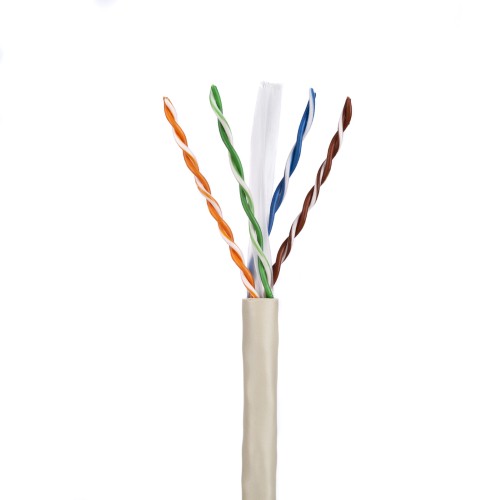
All three types are unshielded twisted pair (UTP) cables or shielded (FTP) cables, utilising four twisted pairs in a common jacket.
There are similarities in terms of length, with each limited to just 100 metres, including the length of the patch cables on either end.
What are the differences between the types of cabling?
While there are noticeable differences between the three types in terms of price, the most prominent variant is that of transmission. As you continue to apply upgrades, there is less chance of signal loss and crosstalk, while a larger frequency bandwidth ensures performance expectations are more defined.
Cat5e has been around for more than 15 years and was the first development of its kind to offer a glimpse into the possibility of 1 Gigabit networks.
Cat5e cables are often 24 gauge twisted pair wires, capable of catering to a Gigabit network at distances up to 328 feet, with patch cables at both ends.
While the release of Cat6 cabling was only a few years later, it still brought about the prospect of a 10 Gigabit network. Most of the 2000's saw Cat5e run to the workstations, while Cat6 was run as a backbone from router to switches.
While offering the possibility of higher transmission, Cat6 cabling still has limits. Indeed, once it reaches a certain distance, the ultimate speed is the same as it would be through a Cat5e cable.
Yet Cat6 still contains a tighter twist in the cables, which allows for two-way communication on each pair of wires - something ultimately lacking in Cat5e.
Cat6a, which many companies appear to automatically opt for without so much as a second thought, also has some slight differences that go beyond price. The cables themselves are much thicker than those of
Cat6, largely due to a tighter winding of the wiring pairs, creating more copper per inch.
Crosstalk is reduced further still, meaning there is even less delay.
So what type of cabling should you opt for?
One of the most common mistakes organisations make when looking at a structured cabling set-up is believing that the higher the cabling category, the faster the network.
However, in reality network speed is primarily defined by the electronic transmission equipment, such as switches.
A network switch will negotiate the fastest link it can manage and will start off attempting for the best speed it is rated for.
Cabling does still play a role as if it cannot handle those speeds, the system will drop down to the next level.
Cat5e still supports Gigabit Ethernet, so unless there is a real need for 10 Gigabits across a given link, it will be sufficient for your needs. Cat5e can still handle 10 Gigabit Ethernet at short distances, such as within a server room or a backbone link.
Having said that, if you are looking for a cable that will help provide for your future needs, then Cat6a will give you the best performance at full distances. It is therefore of the utmost importance that organisations carefully assess the needs of their network both in the present and the future.
Many branded products also offer up to a 25-year product and application warranty when the installation is completed by a certified installer, well worth considering in the decision mix for that extra peace of mind.