Posted by Jane Munro on
More from News


The power and might of internet giant Google has meant that it has largely managed to bulldoze over almost all of its competitors, while also emerging form several high-profile scandals relating to privacy and data security.
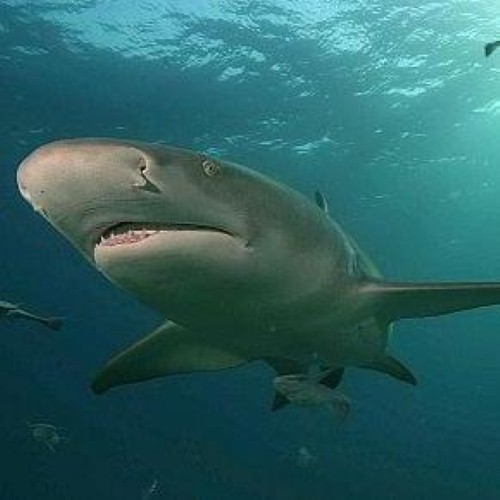
However, having spent so much time establishing itself as the biggest fish in the internet pond, the mighty Google appears to have overlooked a new enemy – sharks.
Yes, really, sharks. Google’s undersea cables are under siege from the sea’s most terrifying predators, which can’t seem to resist the urge to have a substantial nibble on what is a hugely important part of Google’s infrastructure.
The incident affected the company’s new $300 million dollar FASTER underwater fibre optic cabling system, which aims to provide faster broadband speeds to countries across Asia.
According to Network World, the slightly bizarre news was announced by Google’s product manager Dan Belcher during an opening keynote speech at the company’s Cloud Roadshow in Boston.
In describing the news, Mr Belcher added that the company had already taken steps to fight back, pledging to coat its undersea cables with a Kevlar-like material in order to offer some added protection against the sharks and any other threats the sea may offer.
Such materials are usually reserved for the manufacturing of bullet-proof vests, which undoubtedly shows that Google is not prepared to take any chances.
History
Although the concept of Google receiving a setback from a shark attack may seem a strange concept to many, such incidents are nothing new.
In fact, sharks have been gleefully gnawing on fibre-optic cabling ever since it was first installed around 30 years ago. In 1987 four segments of brand new cabling were damaged by sharks unable to resist a nibble.
Interestingling, it seems that sharks have a particular taste for fibre optic cables, as opposed to those made of copper, which is also a hugely popular material for undersea cabling and often remains untouched by anything.
According to Forbes, scientists have concluded that fibre optic cables give off electrical signals that attract sharks and trigger a feeding reflex.
However, Dr Chris Lowe, one of the founders of the Shark Lab at California State University, Long Beach, believes the reasons could be far more simple.
He told Wired that sharks may just be curious. “If you had just a piece of plastic out there shaped like a cable, there’s a good chance they’d bite that too,” he said.
The reasons why sharks are taking a bite are unlikely to be of much concern to Google, which is set to implement its new cabling protection as soon as possible, in order to prevent any financial damage.
So, the next time Google suffers an outage, it could be down to a pair of hungry jaws somewhere in the depths of the sea.