
Posted on
More from News


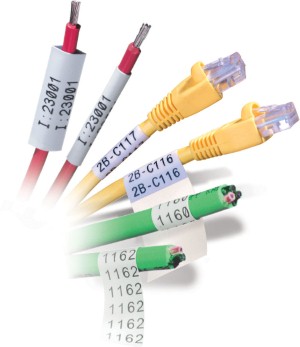
Fibre optics is a technology that has already helped to change the digital landscape of the UK, and indeed the rest of the world, yet things could be about to get even faster.
A team of researchers at the University of California claims to have made a breakthrough that will allow fibre optic signals to be 20 times stronger than those currently available.
The current speeds available through fibre optics have already helped drive innovation in both the home and the workplace.
Many businesses have already foreseen its potential, investing more in the cabling infrastructure and hardware needed to help bring them to the crest of this new and exciting technological wave.
Even central government has done its bit, with the Department for Culture, Media and Sport's Broadband UK (BDUK) project doing its best to promote a £1.7 billion plan to provide speeds of over 24Mbps to the whole of the UK.
There is always a limit
Yet despite the clear benefits and enthusiasm for fibre optics, there are still a number of limitations with the technology, which are often exposed when businesses increase the amount of power and data being processed through their systems.
One of the key advantages that comes with the digital age is the ability to bring remote locations closer together, meaning that systems are often operating over increasingly longer distances.
Distortion is a problem, limiting speeds and the possible lengths of cabling between repeaters.
This was the key area addressed by experts, with Nikola Alic, a leading figure in the research stating in the resulting research paper: "Today's fibre optic systems are a little like quicksand. With quicksand, the more you struggle, the faster you sink.
"With fibre optics, after a certain point, the more power you add to the signal, the more distortion you get, in effect preventing a longer reach."
Getting rid of distortion
The team claims to have addressed the issues by applying what it calls 'frequency combs', to optical transmissions, essentially pre-empting any potential incidents of distortion, making the 'crosstalk' of cabling more predictable and reversible once the signal reaches the receiving end.
Mr Alic added: "Our approach removes this power limit, which in turn extends how far signals can travel in optical fibre without needing a repeater."
The results of this new technique have seen data transmissions sent and successfully decoded after passing through a record-breaking distance of nearly 7,500 miles.
These tests were conducted using standard amplifiers without the use of deploying any repeaters, which in standard cases must be stationed roughly every 60 miles along the cabling route to stop any noise distortion.
Most repeater equipment can be quite expensive, meaning this potential breakthrough could see greater speeds achieved without many of the costly financial overheads.