
Posted on
More from News


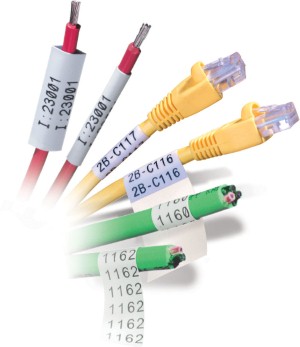
Distributing audio-visual (AV) services to multiple endpoints throughout a location has long been a complex and costly process, with deployers having to deal with a range of cabling solutions, with connections needed to be made physically at switches and direct connectors.
However, there are now new alternatives to these traditional ways of managing AV networks. Increasingly, the solution is technology that can allow video signals to take advantage of the same Ethernet networks that are already in place in many business locations.
These video-over-IP solutions, such as Blustream, deliver seamless AV integration using logical networking tools and software to make connections and ensure video content is delivered quickly and easily, exactly where it needs to go. By relying on existing IP solutions, organisations can route audio and video capabilities to every part of the network without complex rewiring.
How video-over-IP simplifies systems
One of the first benefits of a video-over-IP system is a huge reduction in complexity. Speaking to AV Interactive, chief executive of ClearOne Zee Hakimoglu noted how the vast majority of buildings today have been "flooded" with IP cabling.
"This has opened up enormous opportunities for the AV industry to use that infrastructure instead of investing in expensive, specialist cables that are difficult to terminate," he said.
Being able to deliver a multitude of forms of information, including video streams, audio streams, metadata, and control data, all on one cable type also means deployers can eliminate complex and costly point-to-point installations and much more easily scale up systems - potentially connecting hundreds or even thousands of devices, which could be hugely beneficial in larger environments, such as airports, stadiums or business campuses.
Brad Price, senior product marketing manager at Audinate, also explained that under legacy point-to-point systems, any changes must be made physically. This means moving and redeploying cables and connectors, which is frequently not only expensive, but error-prone.
"AV-over-IP replaces these physical connections with logical ones that are easily managed using software, allowing systems to be efficiently adapted to different needs with minimal cost and risk," Mr Price explained.
The technical benefits of a Blustream solution
However, the benefits of video-over-IP solutions are not limited to ease of deployment and reduced costs, as there are a number of technical advantages that Blustream products can offer.
Solutions utilise lossless compression technology, which means video up to ultra high-definition quality can be distributed over cable lengths of up to 100 metres with virtually no latency, providing almost flawless image quality. Multicast systems can also distribute one-to-one or one-to-many HDMI signals without the need for a network switch.
Other factors in video-over-IP's favour include centralised control, which may be something that's highly valuable for applications such as digital signage. Being able to manage zones and specific locations that may have vast numbers of endpoints at the click of a button can be hugely beneficial in locations such as transport, retail, stadiums and entertainment venues.
Ultimately, these technologies are likely to become a standard solution for distributing a wide range of content, whether this is corporate messaging, video conferencing, training and distance learning, or live TV feeds such as rolling news. As video becomes an increasingly central part of many organisations' strategies, being able to add real-time capabilities quickly and easily will be a must.