Posted on
More from News


The relentless advance of technology has had a dramatic impact on almost every facet of our daily lives. As a result, the demand for ever-quicker connectivity has surged in recent years, providing the driving force for a number of trends, including bring-your-own-device (BYOD), the internet of things (IoT) and, crucially, flexible working.
Innovations in connectivity, such as fibre optic broadband and superfast 4G have required a change in our urban environment, particularly when it comes to the world of business.
Connectivity is king
Businesses have understandably been enthusiastic about embracing new technology, identifying the advantages that come with new trends and the competitive edge it offers.
However, it has come at a cost, with many organisations having to alter their infrastructure in order to accommodate the needs of a modern digital business.
While hardware and networking structures have become commonplace within offices across the land, this dramatic shift in the landscape has permeated into the construction industry, with many building firms acknowledging a need to be more agile in the way they approach new projects.
Smart Construction taking hold
While innovation has caused many industries to advance at a high pace, construction has historically lagged behind.
Building companies have long been criticised for being ineffective, fragmented and slow in embracing new ideas.
Yet the digital age has seemingly finally galvanised the sector over the last two years, with the trend of 'smart construction', beginning to take hold.
The seeds were sewn on the back of a 2013 government report, Construction 2025, which argued that in order for the UK to be at the "forefront of global construction", the sector would need to be "smart", as well as "efficient and technologically advanced".
The report found that IoT and other trends "will drive a step change in how we build and how our built environment operates. Crucial to this is the emergence of new technologies in sensors and data management that will become embedded in our assets, enabling performance to be constantly monitored and thereby driving substantial efficiency gains in facilities and asset management."
Cabling central to smart construction
By ensuring new projects take advantage of smarter designs, use fewer materials, and are kinder to the environment, it will help to increase efficiency and reduce labour costs.
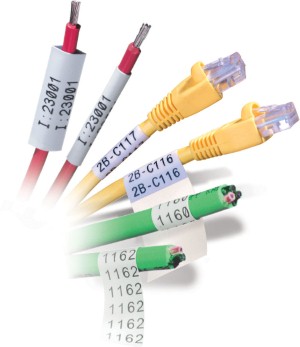
While wireless has become the main trend within many workplaces, structured cabling is still integral to future building projects.
The right cabling set up can help provide the foundation needed for implementing future cabling infrastructure projects. Making the right choice in Cat5 or Cat6 can prove crucial in how you can upgrade your system later on down the line.
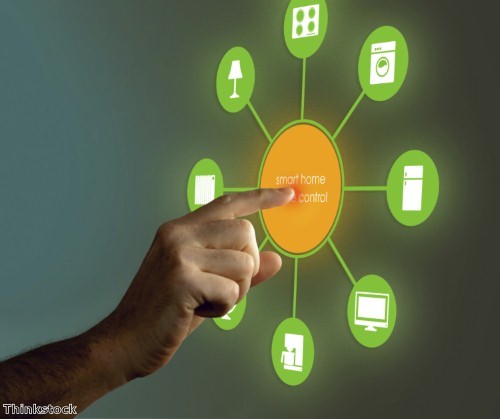
By establishing a link between internet connectivity and the buildings around us, it can open up a whole range of possibilities.
For instance, lighting or central heating can be set and controlled remotely to ensure employees can always work in comfort, while also giving business owners greater control on their energy use and, consequently, their finances.