Posted on
More from News


The digital age by its very nature has seen many people's everyday lives transformed by a swathe of new and exciting gadgets, yet such a bounty of technology comes with an increased demand for power.
While many businesses have recognised the advantages of being able to work on the move with a number of mobile devices, the issue of staying charged is one that has caused a whole generation of professionals to seek the nearest plug in search of the juice needed to stay online and connected.
Indeed, it is no exaggeration to suggest that advances in internet connectivity and infrastructure have gone far beyond that of developments in electrical power, leaving many batteries under increased strain.
Wi-Fi could provide the answer for power
However, just as wireless internet has left us more connected, it could also be the answer to how we power our devices, with research from US engineers suggesting that charging hardware using Wi-Fi signals could soon be a reality.
Experts claim to have recently developed technology known as 'ambient backscatter', which is used to tap into Wi-Fi signals and transform it into power.
Researchers at Washington University have used the technology to create a prototype router, which in tests managed to power battery-free cameras 17 feet away, all without having any negative impact on internet speeds.
How it works
Ambient backscatter technology transforms existing wireless signals into both a power source and a medium for communication, enabling two battery-free devices to be linked by backscattering existing wireless signals.
It does not require a dedicated power infrastructure as it uses existing radio frequency signals, while the router used in the tests sent out radio waves that could then be converted into a direct current.
The whole process is similar to how solar panels convert light into electrical energy and could potentially revolutionise how gadgets are powered.
Powering IoT
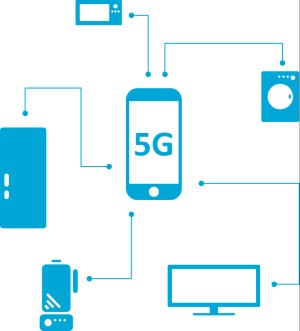
While this development is sure to excite many consumers, powering devices using Wi-FI is sure to be seen as an interesting development for businesses too, particularly those interested in harnessing the possibilities that come with the internet of things (IoT).
By linking hardware throughout the workplace wirelessly, IoT can potentially allow businesses to increase the efficiency of their operations.
A recent Microsoft report on the subject claimed: "An intelligent system is transformative. Point-of-sale scanners on a retail floor are connected to warehouse systems and analytics software at headquarters for industry-leading efficiency in inventory. Robots on a factory floor send production and maintenance information directly to those who need it, for unparalleled reliability and uptime … In each case, new insights are generated that drive the organisation’s objectives forward on many levels."
The increase in efficiency promises to make a business more profitable, making IoT all the more appealing to smaller firms, helping them to create new revenue streams and go some way to level the playing field in what remains a challenging economic environment for many industries.
There would have once been a time when it would have been too financially prohibitive to have an office or workplace connected through Wi-Fi due to the amount of power.
However, if the possibility of connecting all office hardware wirelessly - without the need for an extra power source - becomes a reality, it could prove to be a game changer.