Posted on
More from News


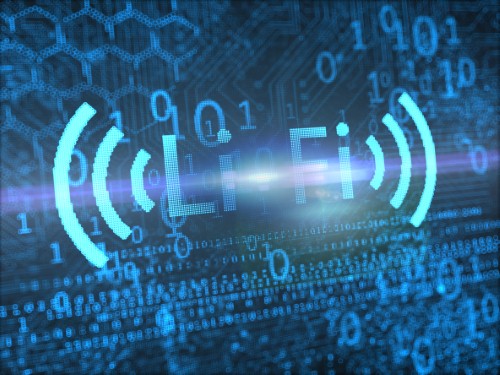
Many people forecast that Li-Fi will be the future of wireless connectivity, with this having the potential to replace Wi-Fi in the coming years. Indeed, Li-Fi has many benefits, with the promise of much faster data transfer chief among them.
But the technology, which uses visible light to send data to devices, is still in its relative infancy, and as such, many people may still have misconceptions about it that puts them off from exploring its potential.
Therefore, we've put together a list of some of the most commonly-held myths surrounding Li-Fi technology, and what the reality actually is.
Myth: Li-Fi results in flickering lights
Because Li-Fi works by modulating the light being emitted by LED bulbs, many people believe this will lead to a noticeable flickering of the lights as data is sent, or that it will induce headaches, but this is not the case. In fact, the modulation occurs at a far higher frequency than the human eye can perceive, at around 1MHz.
By comparison, a computer monitor's refresh rate is about 100Hz - and this is completely imperceptible to the human eye, so with Li-Fi operating at a frequency 1,000 times higher than this, there is no chance of spotting any flickering.
Myth: Users will not be able to dim the lights
The idea that lights must be at full strength to work is also untrue, as Li-Fi works on even the lowest level of light. Advanced modulation techniques, such as eU-OFDM, allow for the operation of Li-Fi very close to the turn-on voltage of the LED, meaning that the lights can be operated at very low light output levels while maintaining high data rates.
This means you can reduce the brightness to as little as ten per cent of full illumination with no noticeable performance dropoff, so if users want to work in a darkened room, they will be able to do so.
Myth: Li-Fi requires direct line of sight to work
It would appear logical that in order to receive the signals sent by modulated lights, a direct line of sight to the source will be required. However, although the signal will be stronger if this is the case, light that has been reflected off other surfaces such as walls is still able to be picked up.
As long as the receivers are able to collect photons, it will still work, and any loss of speed is comparable to that experienced by Wi-Fi when radio waves are subject to interference.
Myth: Li-Fi won't work in direct sunlight
Although it is true that direct sunlight can create interference in the transmission of Li-Fi data, this effect can be countered through the use of optical or digital filters that minimise the saturation levels at the receiver.
Because the sun is a constant, steady source of light whereas Li-Fi is modulated, it is a fairly straightforward process to filter out the sun - or other competing light sources - which means Li-Fi can even be used outdoors in any weather conditions without impacting the speed or efficiency.
Myth: Li-Fi is unidirectional
Another common misconception is that because visible light is only sent out from LEDs, devices can only receive data and not upload it. But this does not mean Li-Fi upstream transmission is impossible, only that it needs another form of light.
In fact, the use of the infrared spectrum, which is invisible to the human eye, is ideal for the uploading of data from devices, and can still deliver gigabit performance over the short distances Li-Fi has been designed for.