Posted on
More from News


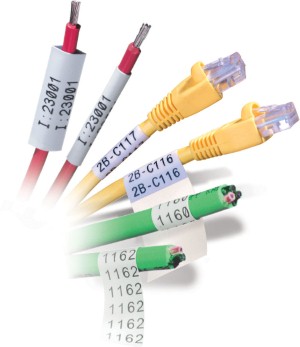
When deployers are fitting cabling installations, tasks such as ensuring all new cables are adequately labelled may often seem like an afterthought. But while this can be a tedious and time-consuming task, it's essential that it is not overlooked.
A poorly-labelled network of cables can cause many problems further down the line, especially in an increasingly complex and crowded environment.
Therefore, taking the time to complete this process clearly and effectively during the initial deployment will make life much easier in the years to come.
Keeping a complex environment under control
This is especially the case in modern buildings where the demands being placed on network deployers are greater than ever, as many of today's networking needs will require a much greater cabling footprint then in previous years.
Whereas in the past, deployments to many office buildings would have been restricted to a few data and telecommunications cables, the evolving needs of the new generation of smart buildings are transforming the way in which networks are managed.
Smart buildings are increasingly integrating their IT infrastructure, with servers, LANs, camera systems, phone lines, video conferencing tools and energy control solutions all requiring connectivity. This means more physical infrastructure, which in turn will quickly result in hugely complex cabling networks.
The benefits of better labelling
In such scenarios, maintenance and repair activities will be hugely hampered if employees are not able to identify at a glance which cables they need to be focusing on. Without clear labelling, even basic troubleshooting procedures will be much more time-consuming and expensive, while any maintenance or upgrade processes will also take much longer.
What's more, effective labelling reduces downtime that may be caused by somebody inadvertently working on the wrong cable, or having to go through a process of trial and error in order to find the correct cable.
Good labelling practices are also important from an auditing and quality assurance perspective. For instance, it can ensure key assets and their warranty information are easily identified, while the use of tamper-proof labelling can also alert workers to any interference that may have occurred.
Key tips to ensure effective cable labelling
To aid with this, it's best practice to follow the steps set out in the ANSI TIA 606-B Cable Labelling Standards. These guidelines are voluntary, but will be hugely beneficial, as they ensure anyone coming in later will be able to easily get an overview of the entire network without the need to learn a new system.
There are a few key factors that are essential in meeting these standards. For instance, consistency is essential, so any company following the guidelines must ensure they are applied to every individual cable within their building.
It should also ensure labels are placed at both ends of the cable and each label identifies the physical location it leads to, usually including the building, floor and room.
The guidelines recommend using printed labels that have been prepared beforehand, but it may be more practical for some deployers to create handwritten labels during the installation process.
Handwritten cables can also be effective as long as deployers take great care when writing to be as clear as possible, but whether printed or handwritten, the labels themselves need to be both legible and durable, which means using long-lasting ink that will not fade over time.