Posted on
More from News


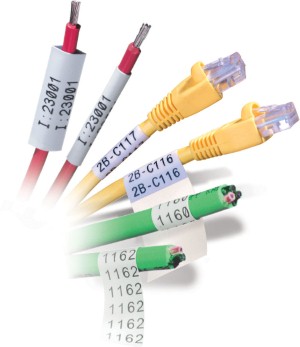
The global market for industrial Ethernet cables is set to enjoy strong growth over the next few years, with the sector set to be worth $941 million (£718 million) by 2020.
This is according to new research by Technavio, and equates to a compound annual growth rate (CAGR) of more than 17 per cent. The study noted that while the market is still dominated by copper cables - which made up more than 77 per cent of the sector last year - demand for fibre optic cables is on the rise, and is the fastest-growing technology.
It was stated this is because of their ability to deliver gigabit speeds over long distances, as well as being able to withstand interference from radio and electromagnetic waves.
Sectors that are particularly interested in fibre-optic industrial cables include oil and gas and the pulp and paper industries. Overall, factory-floor applications will be the primary use case for industrial Ethernet solutions.
In 2015, this part of the market was worth $22.6 million (£16.9 million), but Technavio expects it to show a CAGR of more than 18 per cent over the next few years, reaching $521 million (£390.2 million) by 2020. Industrial Ethernet cables are particularly attractive to this field because of their high bandwidth, open connectivity, and standardisation, as well as the fact they offer the same level of reliability and network security as traditional fieldbuses.
For higher-level industrial control applications, Gigabit Ethernet solutions are preferred, due to their high speed and ability to transmit crucial real-time data. Twisted-pair Cat 6 and 6a copper cables, in addition to fibre optic cables, are able to achieve data transmission speeds of 100Mbps to 1Gbps.
Technavio analyst Bharath Kanniappan explained that industrial Ethernet cables are able to withstand extreme temperatures and resist chemical and oil spills, making them essential components in machines where these are factors.
"These cables are being increasingly adopted to support the framework within these machines due to increased adoption of industrial robots and industrial plant equipment and machinery," he said.
Other areas where industrial Ethernet cables are set to become more prevalent is in control rooms, where local area networks typically include printers, HMIs, servers, and wide-area network (WAN) devices.
In the past, systems integrators frequently opted to create mixed-mode networks that utilise cheap commercial-grade switches and cables in these control rooms, with the use of industrial-grade switches and cables reserved for the field. But Technavio explained the use of such mixed environments can create interoperability issues and delay the diagnosis of problems, which is leading more organisations to install industrial solutions throughout their network.
Technavio also forecast that the increasing use of Power over Ethernet (PoE) cables will be a key driver for the industrial Ethernet cable market. It stated that in future, PoE cables will be able to deliver more power, while remaining compatible with existing standards and devices. What's more, they will offer low costs, ease of maintenance, installation flexibility, and reduced floor space requirements.