Posted on
More from News


If companies want to keep up with the fast pace of technology, it's vital that networking infrastructure is upgraded in order to cope with today's demands. But this may often be easier said than done, as this process can be a costly and time-consuming activity for many businesses.
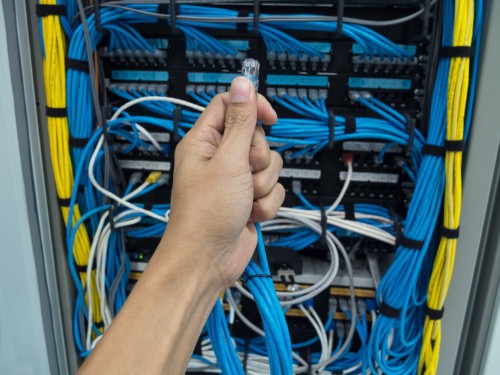
The spine of any network is the cabling infrastructure itself, and this is often the source of bottlenecks for firms that are still using the same technology they have had in place for many years. The most straightforward way to improve performance from a technical perspective is usually to replace older Cat4 or Cat5 Ethernet cables with more capable technology.
But the reality is recabling an entire workplace can be a hugely difficult and expensive process. However, there are other solutions that can be used to give a network a speed boost, using tools such as media converters.
In an article for Network World, product manager at Transition Networks Curt Carlson said these elements are "one of the least glamorous, yet most common and perhaps most versatile tools in a network manager's toolbox".
He highlighted a range of legacy cable types that may be revitalised through the use of such solutions. While they may not be able to handle the high speed and bandwidth demands of all today's traffic, there are several uses for such equipment in the right locations.
For example, Mr Carlson noted that many businesses still contain unused copper phone cables that have since been supplanted by IP telephony. But this could be repurposed through the use of media converters and extenders to bring Ethernet connectivity to remote parts of a building or, for outdoor applications, be used to power connected devices such as wireless access points or security cameras.
Even older solutions such as Coax cables may be useful with the right equipment. Mr Carlson observed many organisations that were pioneers in the use of analogue video conferencing or security feeds may still have these cables in their walls as it is not worth the cost and disruption to remove it.
"By using a coax-Ethernet media converter offering PoE/PoE+, it's possible to resurrect this old cable for re-use with up to 1Gbps Ethernet connections," he stated.
When it comes to more modern technology, there are still ways organisations can make improvements when they reach the limitations of what the technology is capable of. For example, some users of multimode fibre solutions - which are popular in campus backbone deployments where data must travel distances longer than 100 metres - are finding these solutions are starting to reach distance limitations as data speeds increase.
Mr Carlson noted that data can travel up to 300 metres on this type of cable at speeds of up to 10Gbps but this may not be sufficient for some uses. However, even as speeds increase to 40Gbps, media converters or optical repeaters can re-amplify, reshape and retime light signals, allowing data to be repeated for much longer distances.
"Replacing cabling is sometimes required to support network changes, but it always adds cost and time to the upgrade," he continued. Therefore, it is important to know what is already installed and what potential options are available when networking managers are considering an upgrade.