Posted on
More from News


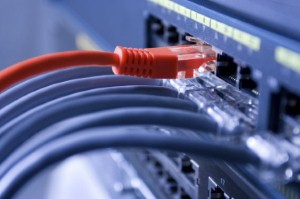
An effective cabling system is an essential component of any network infrastructure, particularly in an era when so many operations demand real-time communications. In these environments, unclear signals or lags of even a few seconds can be fatal to a business.
Therefore, it is critical that networking professionals ensure they follow key best practices when installing cabling solutions, in order to avoid some of the most common problems they may encounter.
Here are a few of the issues that professionals may have to deal with in today's environment, and how to resolve them.
1. Mismatched cabling
One common issue can arise if cables from different manufacturers are being used across different parts of a network - something that may occur as networks grow and are added to. This can lead to electrical mismatching between components. Therefore, ensuring consistency throughout the network is highly important.
However it's not just cables. Faceplates, inserts, and other materials can all cause issues if they aren't consistent throughout the network, and this can lead to costly challenges.
2. Unsuitable length
All networking pros should be familiar with maximum cable length standards, but this isn't always necessarily a guarantee, and where possible, networking pros should look to keep their transmission lengths as short possible. In a recent article for NoJitter, former president of Telecomworx Matt Brunk explained he aims to stick to a 150-foot limit.
Of course, doing this will lead to other considerations arising, such as how best to place considerations, such as locating closets or intermediate distribution frames (IDFs). Tackling these questions early can really pay off in the long run.
3. Interference
Cabling solutions are increasingly being asked to operate in more challenging locations such as industrial premises. This can create problems - particularly when they are placed near high-powered equipment that can create electrical interference that can degrade the quality of signals. These problems aren't limited solely to analogue transmissions, as even digital signals can be affected by strong interference.
To combat this, it's vital cabling is adequately shielded and placed in grounded conduits - but this alone may not be enough in some environments. In this case, networking pros will have to reconsider where they route their cables in order to avoid interference, such as keeping them high off the ground.
4. Meeting PoE concerns
As more devices come online, driven by trends such as the Internet of Things, many organisations are having to reconsider how they deliver the increased power these will require. For many, the solution to this is to move away from local power and embrace Power over Ethernet (PoE) to deliver data and electrical connectivity through the same cable.
But this is not suitable for all locations, so professionals must be aware of the limitations and requirements of this. The Telecommunications Industry Association advises, for example, that PoE cables should not exceed temperatures of more than 15 degrees higher than the ambient surroundings. Reducing allowable bundle sizes by up to half can help reduce the temperature.