Posted by Feature on
More from News


There can be no doubting the fact that fibre optic cabling has been something of a game-changer when it comes to the communication of data.
Processes that previously took hours to complete can now be done in the blink of an eye, a development that has brought many companies firmly into the 21st century.
How did this happen?
In order to understand how exactly this technology has become so popular, it is important to gain a solid understanding of how it works.
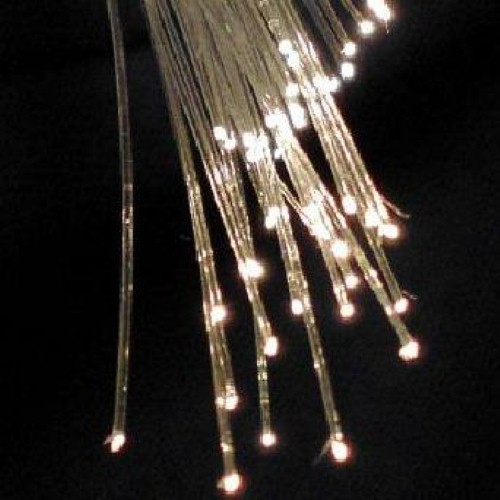
Simply put, each fibre is capable of carrying multiple independent channels that use different wavelengths of light. A good analogy would be that of replacing a single-lane road with a four-lane motorway, meaning that an optical fibre can carry more information at a much quicker rate.
It means that data transfer speeds are now faster than ever before, making fibre optic cabling an essential component for many businesses in a variety of sectors.
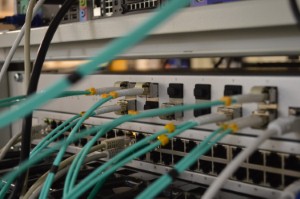
For instance, fibre optic is ideal for short-distance applications such as office networks, as it saves on space and carries far more information than the standard Category 5e cable.
The appeal is heightened by the fact that fibre optics are immune from problems such as electrical interference, meaning there is no cross-talk between signals in different cables and no picking up of environmental noise.
Advantages over copper wiring
Copper wiring has for years been the go-to option for businesses looking to setup an effective cabling infrastructure.
However, fibre optics hold a number of advantages over the more traditional forms of wiring.
For instance, it carries the bandwidth needed for 3,000,000 full-duplex voice calls, dwarfing that of any copper-based system.
There is also the advantage of having a low attenuation loss over long distances, allowing for transmission over long distances. It means that businesses can communicate in-real time quickly and easily.
Speed though is not the only consideration for companies, as fibre optics are usually cheaper too, with traditional systems often requiring large amounts of copper, which can prove to be a costly exercise and also increases the risk of theft.
It is therefore not hard to see why implementing fibre optics is becoming so appealing.
The future
It seems that things could soon be about to get even faster, with the European Commission and Japanese government recently announcing four research projects that will aim to develop the new technologies needed to develop high-speed networks in highly-dense user areas.
One such result of this drive is to provide internet speeds of around 1Gbit/s of bandwidth for every member of the crowd at the Tokyo Olympic Stadium during the Tokyo 2020 Olympics.
It seems that things could be about to get even faster.