Posted by Jane Munro on
More from News


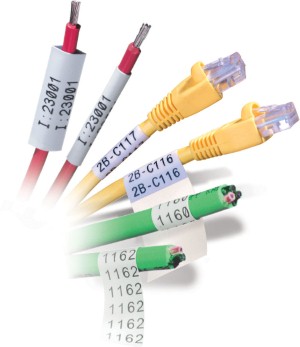
Osmium from TE Connectivity, is a new high density fibre optic chassis specifically designed to reduce the required number of racks deployed in data centres, resulting in reduced floor space usage and associated cost savings. The Osmium high density fibre optic chassis offers up to 45% more LC port density per rack unit compared to the nearest market equivalent, offering 210 LC ports compared to 144 LC ports.
“Data centers are very expensive facilities. Their cost per square meter can reach up to 15 000 EUR. In parallel, thanks to the development of cloud services, mobile web usage, and digital services, there is an increasing need for more data management and storage capacities, which puts existing data centers under pressure,” says Alastair Waite, head of TE Connectivity’s EMEA data center business group.
“Consequently, making the best use of every square meter becomes a priority. This makes physical infrastructure density an essential parameter for data centre managers. The Osmium high density fibre optic chassis enables the expansion of storage and computer capacity within the same floor space and reduces the cost per point of connection for data center managers and network operators.”
The Osmium high density fiber optic chassis is composed of 19 inch unloaded chassis, blades and micro-cassettes. The product’s highly modular design offers unparalleled scalability, as its capacity can be easily configured to meet changing demands.
Furthermore, the design enables easy moves, additions and changes as the integrated cable management system offers smooth access to LC ports. The chassis can be installed quickly and effortlessly by a single technician, which optimises installation and configuration times.
Osmium LC/MPO micro-cassettes are compatible with TE’s MPOptimate pre-terminated fibre optic solution.
As with every MPOptimate connectivity component, the micro-cassettes offer superior transmission performances combined with simple snap-in installation allowing greater flexibility for the cabling infrastructure design for a more agile data centre.