Posted on
More from News

Trends such as ongoing growth in online activity and use of cloud computing applications are expected to support further expansion in the global structured cabling market over the coming years, research has suggested.
In a report offering an overview of the forecast period from 2015 to 2021, Transparency Market Research provided insights into different elements of this sector, including its component segments and geographical growth trends.
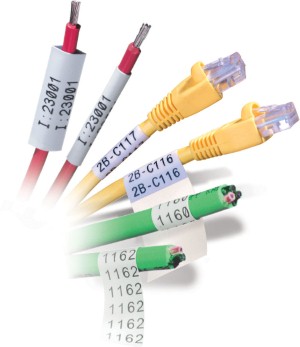
Structured cabling systems comprise sets of cables and various connectivity products and hardware that come together to provide a comprehensive infrastructure, for purposes such as transporting data across a computer network or providing voice or video services.
Looking into the factors that are set to drive demand for these products over the coming years, Transparency Market Research noted that ongoing growth in cloud computing and overall internet use are placing more demand on data centre network bandwidth.
Figures from Eurostat show that, in the EU, just over a fifth (21 per cent) of businesses used cloud computing in 2016, mostly for email and file storage. Between 2014 and 2016, there was a particularly strong increase in use of cloud computing among large enterprises (ten percentage points).
As far as internet use is concerned, the global internet penetration rate is expected to rise from 47.1 per cent this year to 49.3 per cent in 2018, before hitting 51.5 per cent in 2019, according to Statista.
One of the key consequences of these trends for data centre operators is higher demand for network bandwidth, which must be delivered without unsustainable increases in power consumption and cost.
According to Transparency Market Research, structured cabling can help data centres to overcome this challenge, owing to its cost effectiveness and long transmission distance capability.
Structured cabling could help to reduce energy consumption and heat generation in data centres, which could prove significant in countries that have launched initiatives to make the sector greener, such as the UK, Canada, the US, Australia, China and Japan.
There are some potential obstacles to the growth of the market, most notably a lack of awareness about the benefits, high installation and maintenance costs and low electromagnetic capability.
Despite these restraining factors, overall growth is expected to be "robust" during the years up to 2021.
The report revealed that, in 2014, hardware held the largest market share of the various components of the structured cabling segment, accounting for approximately 89 per cent of the sector.
Within the hardware sub-sector, copper cable held the largest share of 59.6 per cent. Copper cable offers benefits including easy installation, relatively low maintenance costs and a longer-than-average expected lifecycle, which helps to reduce the overall cost of ownership.
Geographically, Asia-Pacific is expected to be the fastest-growing region for structured cabling during the forecast period of 2015 to 2021, with a compound annual growth rate of 7.9 per cent.
One of the key reasons for this is the reduction in price of structured cabling in this part of the world, combined with growing demand for bandwidth and the expansion of the IT and communications sectors.