Posted on
More from News


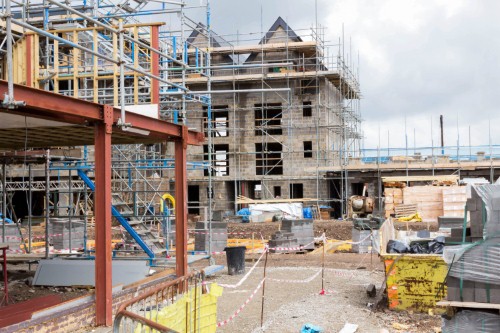
The number of new-build premises in the UK that have access to full fibre connectivity is continuing to rise, while the number of premises without any superfast capability is falling, new research shows.
Figures published by broadband comparison service Thinkbroadband found that for the UK as a whole, almost six out of ten new properties (59.8 per cent) now enjoy an ultrafast connection - defined as speeds of over 100Mbps delivered by fibre, cable or G.fast technology. Overall, 56.94 per cent of premises have a full fibre-to-the-premises (FTTP) line.
This is up from just 39.6 per cent last year and 30.16 per cent in 2016, which indicates how the rollout of this high-speed technology is gathering pace.
Urban areas appear to be particularly benefitting from this technology, with 71.1 per cent of new homes in London having access to ultrafast services and almost a quarter of premises having a choice of at least two infrastructure providers. Thinkbroadband put this down mainly to the number of new flats that have both Openreach and Hyperoptic FTTP connections.
By contrast, the regions with the poorest coverage are the East Midlands (51.2 per cent), the north-east and Northern Ireland (both 49.8 per cent).
When looking at superfast capabilities, which are classed speeds in excess of 30Mbps, around 87 per cent of new properties in the UK have access to such services. However, the research also found that more than one in ten new-build properties (11.6 per cent) have speeds below 10Mbps, which will become the minimum speeds required when the Universal Service Obligation comes into force.
Thinkbroadband said there are still questions over whether targets for improving superfast broadband coverage by 2020 can be met. The site noted that new homes are still lagging behind older housing stock when it comes to availability of this technology, which will make it harder to achieve coverage of up to 98 per cent by 2020.
It stated: "Our projection for this target as things stand today is a date between January 2020 and December 2020, so given that political 'by 2020' targets usually actually mean by 31st December 2020, things look OK. But if another 200,000 homes are built in the next 12 to 15 months and the superfast gap continues, this may lengthen into 2021."